Fast Bowling
Fast bowling is cricket's most physically demanding skill. Combining raw pace with movement through the air and off the pitch, fast bowlers are match-winners who can change games in a single spell.
Pace Categories
Express Pace
145+ kmphElite speed requiring exceptional athleticism
Examples: Shoaib Akhtar (161.3 kmph), Brett Lee, Mitchell Starc, Jofra Archer
Medium-Fast
130-145 kmphMost common international pace
Examples: James Anderson, Trent Boult, Mohammad Shami
Medium Pace
120-130 kmphRelies on movement over raw pace
Examples: Vernon Philander, Chris Woakes, Bhuvneshwar Kumar
Pro Tip
Pace is a gift, but accuracy and movement make you a great bowler. Don't sacrifice control for speed.
— Glenn McGrath
Swing Bowling
Outswing
Ball curves away from right-handed batsman in the air
Grip:
Seam upright, shiny side facing leg slip
Technique:
- Hold ball with seam upright
- Position shiny side towards fine leg
- High arm action
- Release with seam angled towards slips
Famous Practitioners: James Anderson, Trent Boult, Wasim Akram
Video Tutorials: Outswing
Top 5 recommended videos to master this technique
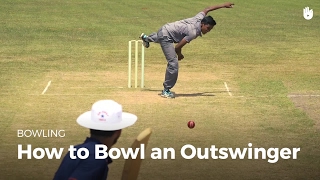
How to Bowl an Outswinger
Sikana English
Outswing grip, seam angle pointing to slips, and release technique for away movement

Fast Bowling Grip - Brett Lee
Brett Lee TV
Brett Lee demonstrates the grip that generates outswing at pace
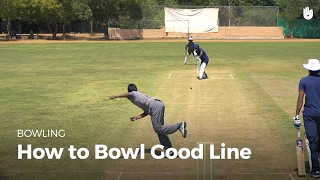
How to Bowl Good Line
Sikana English
Outswing only works with consistent off-stump line — master your line control
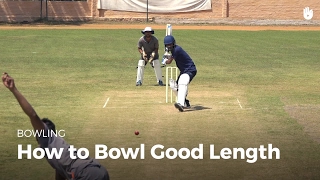
How to Bowl Good Length
Sikana English
Full length is ideal for outswing — make the batsman play and find the edge

How to Bowl in Cricket - Part 1
Sikana English
Bowling action fundamentals — run-up, bound, and delivery stride for outswing
Inswing
Ball curves into right-handed batsman in the air
Grip:
Seam upright, shiny side facing fine leg
Technique:
- Hold seam at slight angle towards leg
- Shiny side faces the batsman
- Release with wrist behind ball
- Follow through towards mid-on
Famous Practitioners: Wasim Akram, Mohammad Asif, Bhuvneshwar Kumar
Video Tutorials: Inswing
Top 5 recommended videos to master this technique
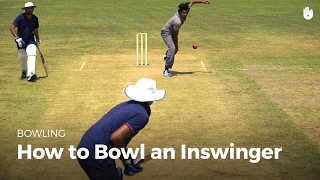
How to Bowl an Inswinger
Sikana English
Inswing grip with seam angled to leg side, wrist behind the ball at release
How to Bowl a Yorker - Brett Lee
Brett Lee TV
The inswinging yorker is the deadliest delivery — Brett Lee masterclass
Fast Bowling Fundamentals
Cricket Coaching
Build the fast bowling action that generates pace for lethal inswing
How to Bowl in Cricket - Part 2
Sikana English
Follow-through and delivery stride — critical for consistent inswing direction

Death Bowling Tips - Yorkers & Restrict Runs
Cricket Coaching
Using inswing at the death overs to bowl yorkers and trap batsmen LBW
Reverse Swing
Ball swings opposite to conventional with old ball
Grip:
Same as conventional but rough side faces different direction
Technique:
- Keep one side very rough
- Other side smooth with sweat
- Bowl at 135+ kmph
- Same action as conventional
Famous Practitioners: Wasim Akram, Waqar Younis, Dale Steyn
Video Tutorials: Reverse Swing
Top 5 recommended videos to master this technique
Seam Bowling - Grip and Technique
Cricket Coaching
Seam position is everything in reverse swing — learn to control the old ball

How to Bowl a Bouncer - Brett Lee
Brett Lee TV
Raw pace is essential for reverse swing — Brett Lee on generating speed

How to Bowl a Slower Ball - Brett Lee
Brett Lee TV
Variations that complement reverse swing — keep batsmen guessing
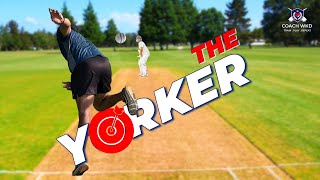
How to Bowl Yorkers Like a Pro
Cricket Coaching
The reverse swinging yorker — the ultimate wicket-taking delivery
Introduction to Bowling
Sikana English
Bowling basics and ball maintenance — key for understanding reverse swing conditions
Seam Bowling
Seam bowling relies on the ball landing on its seam and deviating off the pitch. Unlike swing which moves in the air, seam movement happens after the ball pitches.
Seam Up Bowling
Keeping the seam perfectly upright to maximize movement off the pitch. The ball can deviate either way depending on which side of the seam hits the surface.
Masters: Glenn McGrath, Vernon Philander, Kyle Jamieson
Wobble Seam
The seam wobbles in flight, creating unpredictable movement. The ball can move either way, making it difficult for batsmen to read.
Masters: Mohammad Abbas, Stuart Broad
Common Mistake
Hitting the seam consistently requires thousands of hours of practice. The key is a repeatable action and consistent release point.
Physical Demands
Fast bowling places enormous stress on the body. Proper conditioning is essential to maintain pace and prevent injuries.
Key Areas to Strengthen
- • Core stability
- • Lower back strength
- • Shoulder mobility
- • Hip flexor flexibility
- • Leg power
Common Injuries
- • Stress fractures (back)
- • Side strains
- • Shoulder injuries
- • Ankle sprains
- • Knee problems
Pro Tip
Never underestimate recovery. Ice baths, massage, and rest are as important as training. Listen to your body.
— Dale Steyn